Every rooflight we fit is sealed double glazing or better, so the real question on a replacement is whether a triple glazed rooflight (or skylight, in everyday speech) earns its place on your roof or whether a well-specified double unit does the job. This page sets out how the two differ, where the extra pane helps, where it gets in the way, and what we look at on the survey before we write the figure into your quote. The wider picture sits on the energy efficient rooflights page.
What is actually in the unit
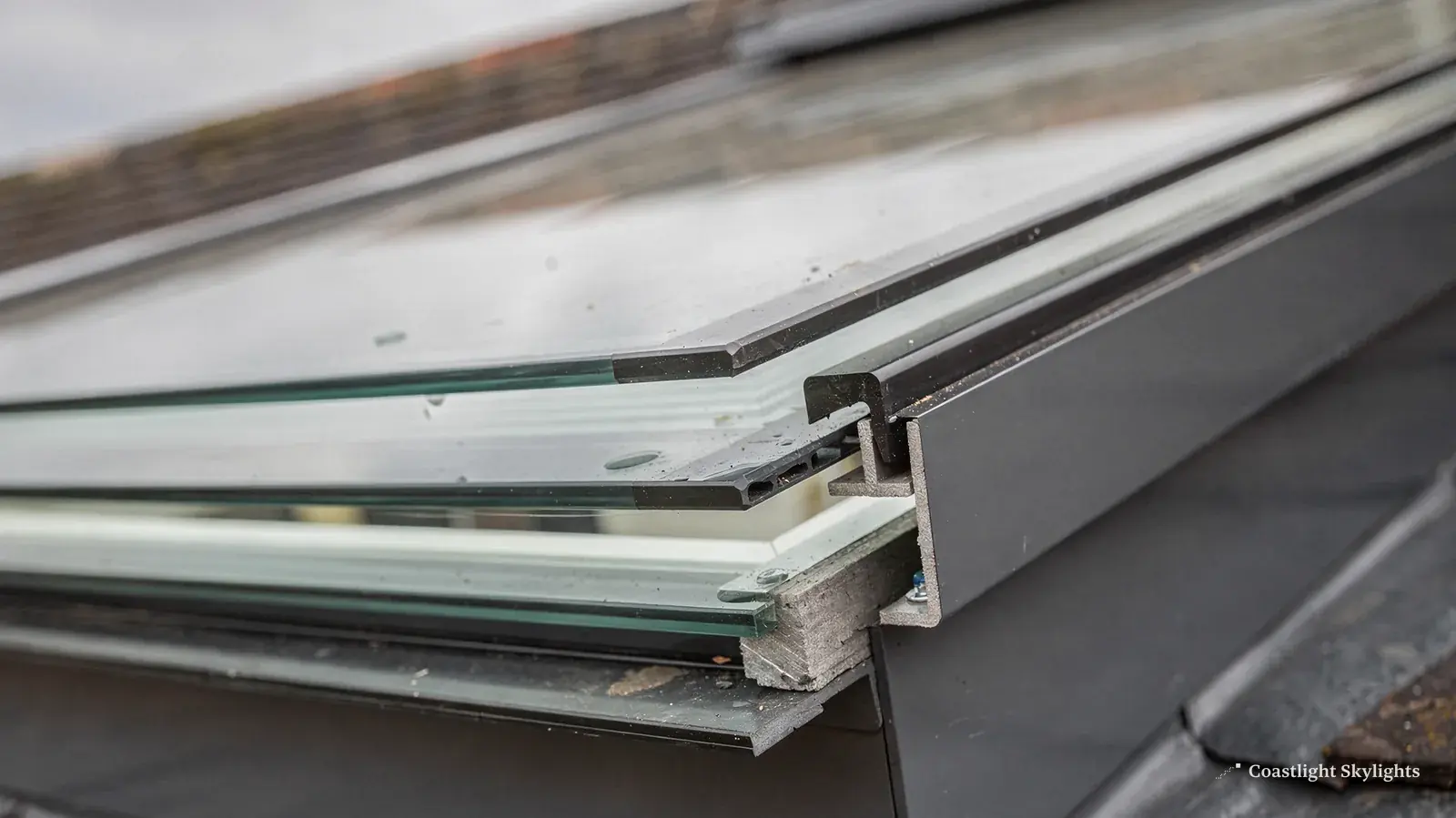
A sealed glazing unit is two or three sheets of glass held apart by a spacer bar, with the gap between them filled with gas and the cavity sealed at the edge. Everything that makes a unit perform, apart from the number of panes, is in the detail of that sandwich.
The inner pane of a double unit usually carries a low emissivity coating, a microscopically thin layer that reflects heat back into the room instead of letting it pass out through the glass. The cavity is filled with argon, which moves heat less readily than air. The spacer is the strip around the perimeter, and a warm edge spacer made of composite material or plastic loses far less heat at the glass edge than the old aluminium bar. We cover that part on its own page, what is a warm edge spacer.
A triple unit adds a third sheet and a second cavity. Two cavities mean two layers of gas, and usually two low emissivity coatings. The heat has a longer, harder route out, so the centre of the glass runs warmer on the inside face in winter.
Double glazed: where it still makes sense
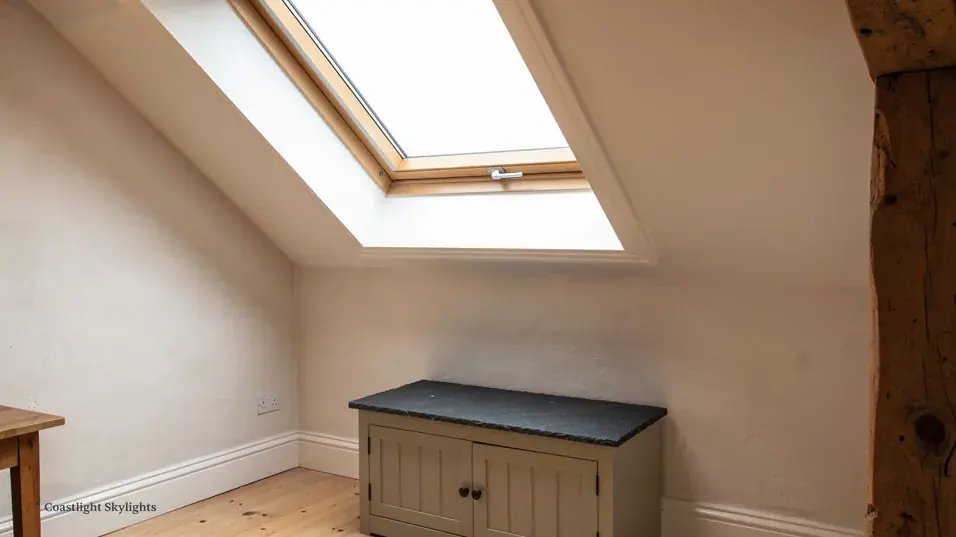
A modern double glazed rooflight is not the poor relation it was fifteen years ago. With a low emissivity coating, argon fill and a warm edge spacer, a double unit in a decent frame comfortably meets the Building Regulations for a replacement. Part L asks a pitched-roof roof window for 1.4 W/m²K, or Window Energy Rating band B, and a flat roof rooflight or a lantern for 2.2 W/m²K. A properly specified double unit can hit both.
That matters because the regulation is a floor, not an aim. If your existing rooflight is a single sheet of glass or an ageing aluminium frame with a failed seal, moving to a good double unit is already a large step. The sort of roof where we would happily stay with double glazing includes:
- a small flat roof rooflight over a landing, utility room or bathroom, where the glass area is modest
- a roof window in a loft room that you only use in the evening
- a rooflight over a space that is not heated all day
- a conservation rooflight where the slim profile of the original is the point of the job
In each of these the cost of the extra pane buys very little, and a heavier unit can cause more trouble than it solves.
Triple glazed: what you gain
A triple glazed rooflight is better at keeping heat in, and it shows in three places.
First, the U-value. Part L sets a ceiling, and a triple unit sits comfortably below it. If you want to see how the number is reached and why the frame matters as much as the glass, read rooflight U-values explained.
Second, comfort. A rooflight is a hole in the thermal envelope at the one point where warm air rises to meet it. On a still winter night the inner face of a double unit can feel noticeably cool on your forehead if you sit under it. Triple glazing keeps that inner surface warmer, which also means you feel less of a cold downdraught across the room.
Third, condensation. The warmer the inner pane, the less likely moisture in the room air is to settle on it. That does not remove condensation in a steamy kitchen or bathroom, but it gives you more margin. We go through the causes and the fixes in reducing condensation on rooflights.
Triple glazed: what it costs you elsewhere
An extra sheet of glass is not free in any sense. These are the trade-offs we raise on the survey.
Weight
A triple unit is noticeably heavier than a double of the same size. On a small rooflight that barely registers. On a large lantern, a long run of fixed glazing or a big opening rooflight, the added load affects the frame, the hinge and motor on an opening unit, and the kerb or upstand underneath it. We check whether the existing structure and frame will carry the heavier glass before specifying it, and it can change the lifting method on the day.
Thickness
A three-pane unit is thicker, and the frame must be made to take it. A slim conservation profile or a heritage-style bar often cannot hold a triple unit without becoming visibly chunkier, which can defeat the reason you chose it. Where a roof sits in a conservation area or a listed building, appearance often decides the glazing before performance does. Our conservation rooflights page covers how that plays out.
Light and solar gain
Each extra pane and coating takes a little visible light out of what passes through, and it cuts the solar heat entering the room as well. In winter that works against you on a south-facing roof, because free warmth from the sun is useful. In summer it works for you. If overheating is your worry, a separate and better-aimed answer is the glass coating discussed in solar control glass for south-facing rooflights.
| Point | Double glazed | Triple glazed |
|---|---|---|
| Part L target met | Yes, when well specified | Yes, with room to spare |
| Weight | Lighter | Heavier, check the frame and kerb |
| Frame depth | Slim profiles possible | Deeper frame needed |
| Inner pane in winter | Cooler | Warmer |
| Best suited to | Small, occasional or heritage rooflights | Large, daily-use or north-facing rooflights |
Which roofs gain most from the third pane
There is no single answer, but there are patterns. A triple glazed rooflight pays its way in rooms you heat for long hours and where the glass is a big share of the ceiling. A kitchen extension with a large flat roof rooflight or a lantern is the clearest case. The glass area is generous, the room is warm for most of the day, and anything that cuts the loss at that glass is working all year.
North-facing and shaded rooflights also lean towards triple glazing. They collect little solar warmth, so the heat they lose is not paid back by the sun, and the lower gain from the extra pane costs you nothing you would have had anyway. A rooflight in a deep light well between tall terraced walls, which many Brighton and Hove houses have, behaves like a north-facing one whatever the compass says.
By contrast, a south-facing rooflight over a room that already runs hot in the afternoon is rarely helped by adding a third sheet. You may be better served by double glazing with a solar control coating. Our guide on whether rooflights overheat in summer explains how to weigh the two.
Roof lanterns, flat rooflights and roof windows differ
The same decision lands differently on each type of unit.
On a roof lantern, there are many panes of glass set into bars, and the weight adds up quickly. Triple glazing is common on new lanterns over kitchens and dining rooms, but the bars and base frame must be designed for it. A lantern that was built for double glazing cannot simply be reglazed with triple. The whole unit is usually replaced.
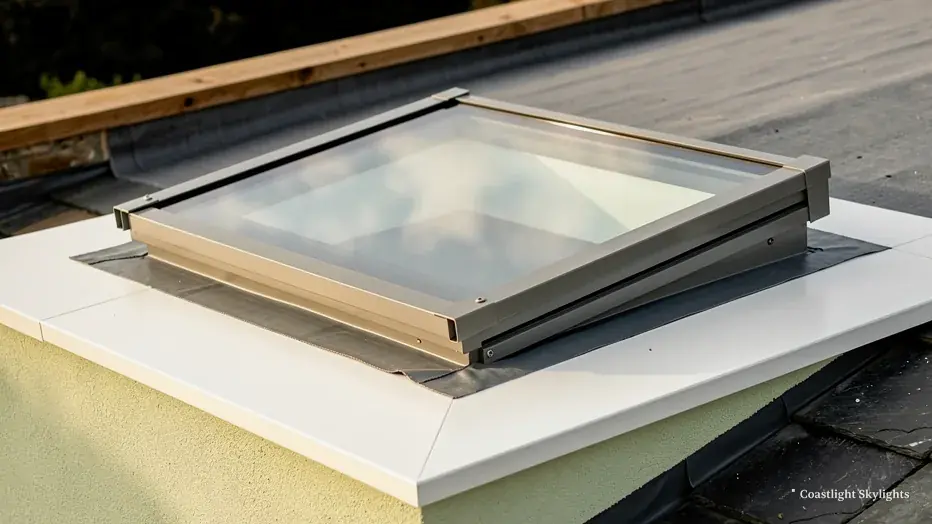
On a flat roof rooflight, the choice is often between a double unit under a rigid dome or a triple unit in a flat glass rooflight. The sizes are usually modest and the weight is manageable. What matters more is the upstand or kerb. A tall, well-insulated kerb does a lot of work for the thermal performance of the whole rooflight, sometimes more than the third pane.
On a roof window in a pitched roof, you are choosing from a manufacturer range. The standard unit is double glazed with a coating, and the triple option is offered as an upgrade. That includes the VELUX windows we fit. The frame is designed for one or the other, so the swap is a product choice rather than a custom job, and these units are held to 1.4 W/m²K, or Window Energy Rating band B, under Part L.
Replacing a whole unit or just the glass
There is a distinction that catches homeowners out. Taking out an entire rooflight or roof window and putting in an equivalent is building work: Building Control must be told, and Part L governs the new unit. Fitting different glass into a frame in good order is not treated as a controlled fitting.
That has a practical effect on the double or triple question. If your frame is sound and you only need new glass because a seal has failed, the frame can often take another double unit of the same thickness, but not always a triple. Where a thicker unit will not fit, the honest route is to replace the whole rooflight. A misted unit cannot be repaired. The seal has gone and the glass is replaced, as we describe on misted and failed rooflights.
When a complete rooflight or roof window is swapped, we deal with the Building Control paperwork, filing it with the council or with a private registered building control approver. The full rules are in our Building Regulations guide.
Opening, walk-on and sun tunnel variations
Some rooflights carry extra demands that affect the glazing choice.
An opening rooflight with a motor needs a frame and operator that can carry the glass, so triple glazing can push you to a larger actuator or a different model. See electric and opening rooflights for what that involves.
A walk-on rooflight is built from laminated, structural glass in several layers already. It follows its own rules for load rating, and the thermal build up is part of that design rather than something we add on.
A sun tunnel uses a small dome and a reflective tube. Its glazing is a different animal from a room-sized rooflight, and a third pane is rarely the point there.
Access, weight and what it means on the roof
The glass decides how the job is done on the day. A heavy triple unit for a large lantern may need more people, a lifting frame or a crane, and that shapes the route to the roof. In a tall Brighton terrace with a parapet, or on a mansard where the only way up is a street-side tower, the lifting method matters as much as the glass. A mobile platform may suit a light double unit that a hand-carried approach would not suit a heavy triple.
That is why the access plan is a written page in every quote. It states how we reach the roof, which of us applies to the council for scaffold licences and parking bay suspensions, whether a converted building needs freeholder consent, the Building Control route and the price. You can read how it works on the access plan, and the licence side on scaffold licences and parking suspensions. If you live in a flat, rooflights in flats and leasehold buildings covers the lease question, since the roof of a converted house is usually the freeholder's and your lease may require written consent.
Planning and the look of the glass
Swapping a double unit for a triple one in the same frame does not change the outside appearance of the roof in any way that planning notices. A new or larger opening is another matter. Rooflights on houses can fall under permitted development, subject to conditions on how far they stand proud of the roof and on side-facing glazing. Flats have no permitted development rights, and for a house the same rights can be removed by an Article 4 direction, and also by a condition on an earlier planning permission. Listed building consent is also required for a listed property. We set the rules out in the planning permission guide, and the council is the place to confirm your own street.
How we help you decide
We do not push the biggest specification. On the free survey we look at the room below, which way the roof faces, the size and type of the rooflight, what the frame and kerb can carry, and any constraint from conservation or leasehold. Then we say which glazing we would fit and why, and the quote carries a fixed written figure. If the third pane is not worth it for your roof, we say so. If you are weighing the idea, the short version is on is triple glazing worth it for a rooflight. For what a new unit does to the temperature of the room, read do rooflights make a room cold. For what affects the figure, see costs.
The finished work carries our 10-year workmanship guarantee, and the details are on our guarantee. The glass supplier's own product warranty is separate.
Before you choose
If you are still undecided, work through these points with the rooflight in front of you.
- How big is the glass compared with the ceiling it sits in?
- Which way does it face, and does a wall or neighbouring roof shade it?
- Is the room heated for most of the day or used occasionally?
- Can the frame, kerb and access route cope with a heavier unit?
- Does the look of the original matter to you or to the council?
If the answers point towards a large, heated, shaded room, a triple glazed rooflight is a sound choice. If they point towards a small, occasional or heritage rooflight, a well-made double unit usually does the job. Either way, return to the energy efficient rooflights hub for the rest of the picture, or arrange a no-charge survey and we will measure up and send a fixed written quote.