On many Brighton and Hove roofs, the glass is the easy part. Getting a safe platform to the roof is the real job. If the only way up is from the pavement, you need a scaffold licence from the council before a pole goes up, and if a van or a tower has to stand in a resident bay, you need that bay suspended as well. This guide explains who grants those permissions, what the paperwork is for, and how we deal with it so you do not have to. It supports the work described on the Coastlight home page, and it is the reason every quote we write includes a written access plan.
Why a rooflight job can need a scaffold licence in Brighton
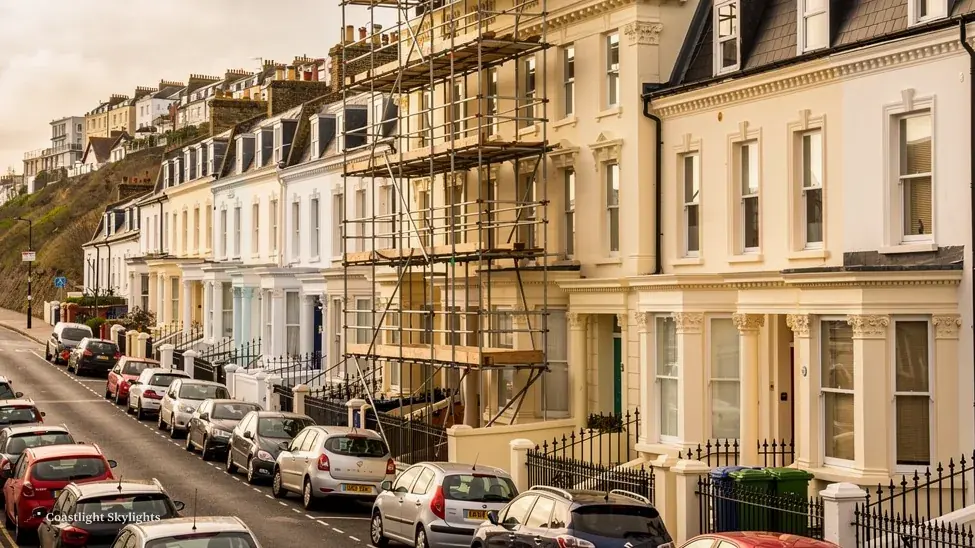
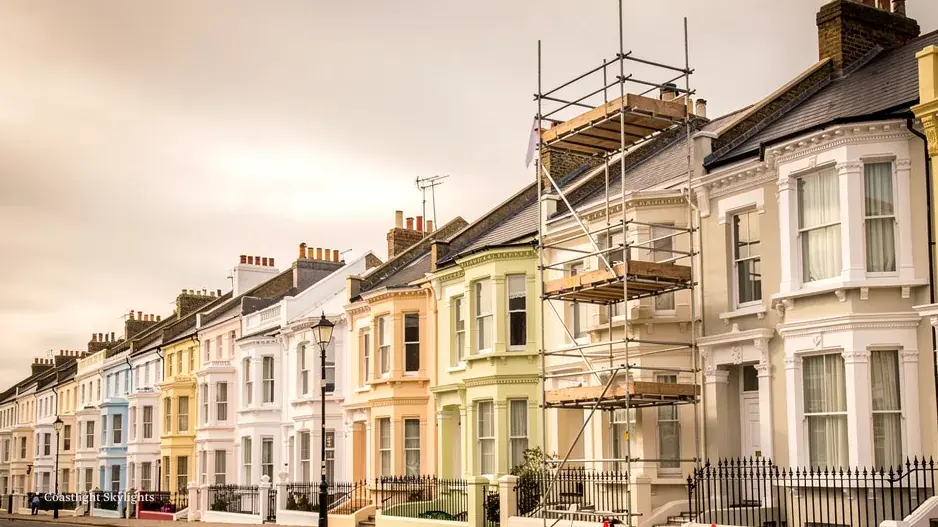
A roof window or a flat roof rooflight is a small item. Fitting one still means working at height with tools, glass and timber, and the rules on safe work at height do not shrink to match the size of the product. If a unit sits on a rear roof with garden access, a scaffold can stand on private land and no licence is involved. If it sits on a front roof, on a terrace with no rear route, or on a building whose only open side faces the street, the scaffold stands on the public highway. That is where a scaffold licence Brighton residents are asked for comes in.
The licence is the council's permission to put a structure on land it manages for the public. It protects people walking past, drivers using the road, and the council's own responsibility for the highway. It is separate from planning, separate from Building Regulations and separate from any landlord's consent. A job can need none of them, one of them or all four.
Roof work on a tall terraced house is the classic case. The back may be walled in, with a mews, a neighbour's back area or a shared passage in the way. The front looks straight onto the footway. A tower or scaffold on the pavement may be the only sensible answer, and that makes the licence part of the plan from the first visit.
Who issues the licence
The licence comes from the highway authority for the street, and that is not always the same body across our patch. Within Brighton and Hove it is Brighton & Hove City Council, which is a unitary authority. Further out, in East Sussex or West Sussex, the highway authority is the relevant county council. A town may have a district council for planning and Building Control while the county council looks after the road outside.
So the first question for any address is not "who is my council" but "who looks after the road the scaffold will stand on". Some private roads and estate roads fall outside the council's licensing altogether, and in that case the landowner or managing agent gives the permission instead. The survey is where we find out which it is.
We do not state fees or lead times here, because they are set by each authority and they change. The licence is applied for on the council's own forms, and the council tells us the terms that attach to it. Those terms are then written into your access plan so you can see them before work starts.
Scaffold licence, tower licence and skip permit are different things
The word "licence" is used loosely, so it helps to separate the pieces.
| Item | What it covers | Who applies |
|---|---|---|
| Scaffold licence | A scaffold or tower standing on the pavement or road | Us |
| Parking bay suspension | Holding a bay clear for a tower, lift or delivery | Us |
| Skip or materials permit | Waste or materials left on the highway | Us, where used |
| Freeholder consent | Alteration to a roof you do not own | You, with our paperwork |
The first three are highway matters and we deal with them. The last is a lease matter between you and your freeholder, and we explain it in the flats and leasehold guide.
Parking bay suspensions on permit-only streets
Many central streets are permit-only. Residents rely on those bays, and the council does not let anyone simply park a work vehicle or stand a tower in one. A bay suspension is the formal way to reserve space for a set period, with signs placed in advance so other drivers know the bay is out of use.
For a rooflight job, a suspension is needed when a tower has to stand against the front of a building, when a delivery of a lantern or a large glass unit has to be offloaded close to the door, or when a lifting rig needs room to operate. The glass for a big flat roof rooflight is heavy and awkward, and carrying it far along a pavement is neither safe nor sensible.
Steep streets behave differently. A vehicle on a slope needs more room and more care, and a tower on a sloping pavement needs levelling. We look at the gradient on the survey and note it in the access plan, because it affects both the equipment and the licence application.
What an application usually needs
Each authority has its own form, but the information they ask for is similar. It tends to include the address, the length and position of the scaffold or the bay needed, the dates, a plan of how pedestrians are kept safe, and evidence of cover held by the scaffolder. You do not draw this up. We gather it from the survey and the access plan and send it in under our own name.
The licence then has conditions. Common ones concern keeping a clear width of pavement, lighting and marking the scaffold, fitting protective boards or fans, and removing everything by the end date. The scaffolder follows them, and so do we. If the dates move, we tell the council and you, and the access plan is updated to match.
Keeping this paperwork with us has a simple reason. A householder who applies directly has to guess at the structure, the dates and the boards. Someone planning the work from the roof can answer all of those at once.
Choosing the route to the roof
Before any licence is requested, the real question is how to reach the roof safely. There are three common routes, and the best one depends on the building.
Rear scaffold through the garden
Where there is a side passage or rear access, scaffold stands on your land and no highway licence is needed.
- No pavement or bay involved
- Needs a route for the poles
Tower or scaffold from the street
Where the building has no rear access, equipment stands on the highway.
- Needs the scaffold licence
- Often needs a bay suspension
A third option is a mobile platform, which can suit a lower job or one where full scaffold would be out of proportion. A platform can still occupy a bay or a footway, so it can still need permission. We say which applies in the plan and we do not guess.
The aim is to use the least intrusive route that is still safe. That keeps cost, disruption and the licence work down. It also means you are not paying for a larger scaffold than the rooflight needs.
Roofs where access sets the whole plan
Some Brighton and Hove roofs make the scaffold the biggest decision of the job. A tall terrace with a butterfly roof has a valley between two slopes, hidden behind a front and rear parapet, and the rooflight may sit right in that valley. Reaching it safely can mean working from the street side and building up past the parapet. A mansard roof has steep lower slopes that cannot be walked on, so access is needed along the whole face. A converted flat at the top of a house may have the only access through the communal stair, which brings the freeholder and the other residents into the plan.
Walk-on rooflights and roof lanterns on flat roofs behind a parapet often avoid the street altogether. The roof can sometimes be reached from inside the building through an existing hatch or a window, with materials passed up by hoist. That is a lighter route, though it can still need a hoist position on the highway. Our pages on walk-on rooflights and roof lanterns show the sort of units that go up this way.
Conservation areas and listed buildings
A scaffold does not change a building's character, so it is a temporary matter, but a street in a conservation area can have its own expectations about how long equipment stands and how it looks. The council may attach conditions to the licence. That sits apart from the planning question of whether the rooflight itself is allowed, which the planning guide covers. If your building is listed, the rooflight needs listed building consent in addition to everything else, and the scaffold is arranged around those dates.
Where a licence meets the other approvals
A highway licence rarely stands alone. It sits beside other steps that have to line up, and getting the order right avoids a wasted visit.
- If the work is notifiable, the Building Control notice goes in before work begins. See the Building Regulations guide.
- If you need planning consent, that comes first. The planning guide explains when.
- If you are a leaseholder, the freeholder's written consent is dealt with before the roof is touched.
- Neighbours who share a boundary or a roof are told in advance.
The access plan lists each of these on one page, so you can see what has been done, what is waiting and who is responsible. That is the point of writing it down.
What happens on the day
- Signs and bay Where a suspension is in force, the signs are already up, and the bay is clear.
- Access goes up The scaffolder erects the tower or scaffold to the licensed footprint and checks it.
- Protection The pavement is kept passable, boards and lights go on as the licence requires.
- The rooflight work The old unit comes out, the opening is checked, and the new unit is set and weathered.
- Strike Access comes down, the footway is left clear, and the bay is returned.
For how long the fitting itself takes, see how long it takes to fit a skylight. Access time is a separate matter, which is why the plan shows the dates for both.
Questions about the licence
These are the points that come up most when we first visit a street-front roof.
Do I have to apply myself?
No. We make the application for the scaffold licence and any bay suspension. You approve the access plan, and we do the rest.
Is a licence needed on a back garden job?
Usually not, because the scaffold stands on your land. A small route across a neighbour's land is a different matter, and we would ask their agreement. The survey settles it.
Which council do I deal with?
The one that maintains the road outside. In the city that is Brighton & Hove City Council. Elsewhere in our area it can be East Sussex County Council, West Sussex County Council or, for the few places just over the Surrey line, Surrey County Council. We find out which, and we do the applying. Details of the cost side are on the costs page.
Does the licence delay the job?
It adds a step to the schedule, which is why we start it as soon as you accept the quote. We do not promise council timings, because they are outside our control.
To go back to the overview, visit the main page, or book a free survey and we will check the street, name the route and put the licence in writing.