The short answer: A well-fitted sun tunnel should last for many years, and its life depends on the parts, the roof and the weather exposure rather than on a fixed date. The dome and the flashing take the weather, so they are the parts that age first. The tube and diffuser inside are protected and tend to outlast them. Our work carries a 10-year workmanship guarantee, which covers the installation and is separate from how long the product itself lasts.
It helps to see a sun tunnel, a small tubular skylight, as several parts that age at different rates. This page sits under our main sun tunnels page and explains how long each part tends to last, what shortens its life and what to do when a unit reaches the end of it.
The parts, and which age first
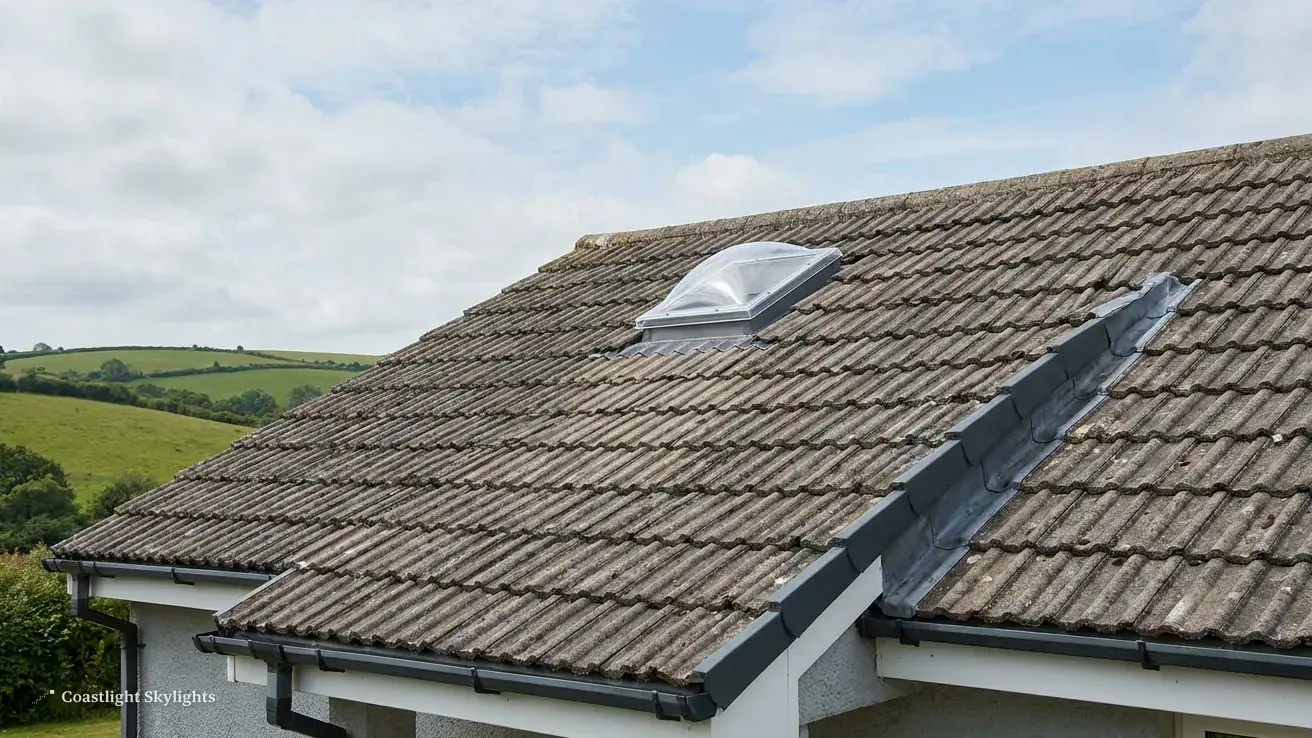
A sun tunnel has four main parts. The dome sits on the roof and takes sun, rain, frost and wind. The flashing or kerb joins the dome to the roof covering and keeps water out. The tube carries the light through the loft. The diffuser sits in the ceiling.
The dome is the most exposed. Sunlight, over the years, can make some plastics cloudy or brittle. The flashing is the next most exposed, and what happens there depends on the roof it sits on. The tube and diffuser live indoors, out of the weather, and rarely wear in the same way.
What shortens the life of a unit
- Exposure. A roof facing the prevailing wind and salt air near the coast sees harder weather than a sheltered one.
- Poor fitting. Flashing that is badly lapped, or a kerb that is not properly upstanded, lets water in early.
- Build-up on the dome. Moss, bird droppings and debris trap moisture and reduce light.
- Condensation in the tube. Warm damp air meeting a cold, uninsulated tube can leave water running down the inside.
- Cheap parts. A thin dome or a low-grade seal will age faster than a better one.
Good fitting is the biggest factor you control. A sun tunnel that is flashed correctly into the tiles or slates, or set on a sound kerb on a flat roof, avoids most early problems. The detail is described in how a sun tunnel is installed.
Pitched and flat roofs age differently
On a pitched roof, the flashing has to work with the tiles or slates around it, and an ageing roof covering can affect the join. On a flat roof, the kerb and the waterproofing membrane are what matter, and their condition decides how well the dome stays dry. We compare the two in sun tunnels on flat and pitched roofs.
Coastal air and the Brighton and Hove roof
A roof near the sea sits in salty, windy air, and that is hard on exposed fixings, sealants and plastics. Debris that gathers behind parapets in older terraces also ends up on domes and in valleys. A sun tunnel on a sheltered back slope will usually age more gently than one on an exposed front elevation.
None of this makes a sun tunnel a poor choice. It means the detail at the roof matters, and that the dome position is worth choosing with the weather in mind. We look at that on the roof or from a safe platform, not from the ground.
Signs a unit is near the end
You will usually see it before it fails outright. Look for these.
- A dome that has gone cloudy, yellowed or crazed with fine cracks.
- Staining or damp marks on the ceiling around the diffuser.
- Water droplets or a film of moisture inside the diffuser.
- A dark ring on the roof around the dome.
If you see damp or moisture, do not leave it. A unit with failed parts needs an assessment, and in most cases the answer is to replace it with a new, correctly flashed sun tunnel rather than patch the old one. The same idea applied to other glazed units is on our misted and failed rooflights page.
Looking after a sun tunnel
Sun tunnels need very little care. Keep the dome clear of moss and leaves, and wipe the diffuser now and then. Check the ceiling around it after heavy rain or a hard winter.
Cleaning the dome means getting onto the roof, which is not safe without the right access. Do not climb up yourself. If the dome needs attention and the roof is tall or steep, ask for a visit instead. We plan roof access properly, using a rear scaffold, a street tower or a mobile platform as the building requires. The written access plan in your quote sets out the route and who arranges any council licence. See also scaffold licences and parking suspensions.
Guarantee and lifespan are different things
People sometimes mix these up. The lifespan is how long the product itself performs. A guarantee covers a promise about the work. Ours is a 10-year workmanship guarantee on the installation, and you can read what it covers on our guarantee page. New units go in to current Building Regulations, and a notifiable replacement has its Building Control notification made by us. For the rules, see the Building Regulations guide.
Replacing an old unit
Replacing a whole sun tunnel unit is building work, so the new one needs to meet current requirements. Often the opening is already there, which can make a swap simpler than a first-time fit. We still check the roof around it, the tube and the ceiling finish. The survey is free, and a fixed written quote follows, so you know the figure before work starts. You can read what affects it in how much a sun tunnel costs.
To judge whether one is right for your room in the first place, read are sun tunnels worth it. To have a tired unit assessed, request a free survey, or go back to the sun tunnels hub.