East Dean
Historic buildings in a Downs valley village inside the park
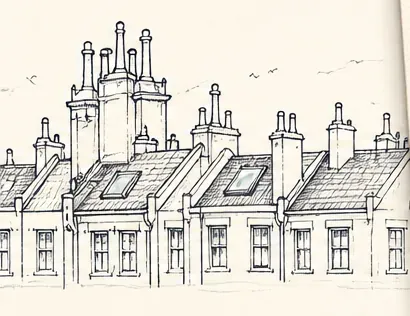
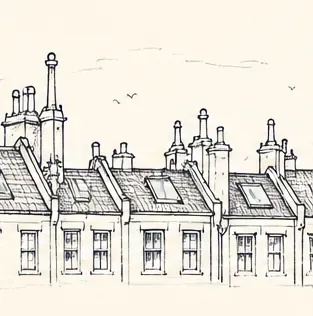
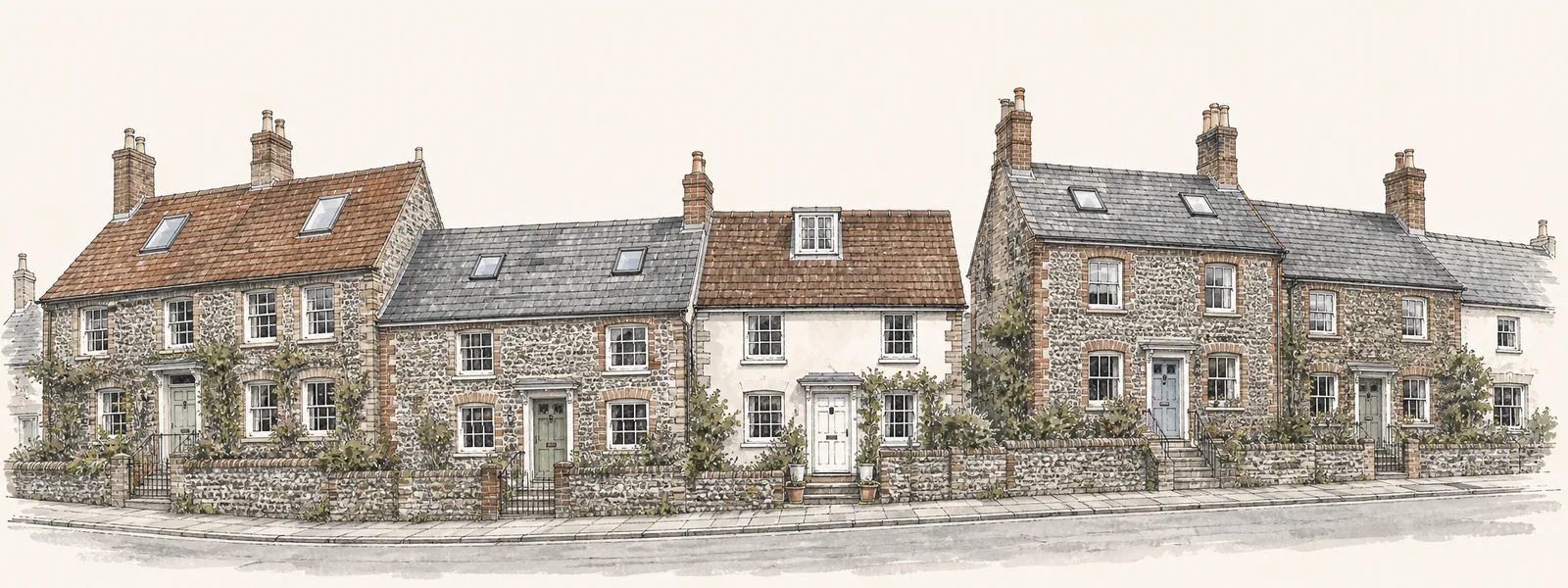
East Dean sits in a dry valley on the South Downs, with the A259 running through it between Eastbourne and Seaford. By road it is 17.8 miles east of central Brighton & Hove. The parish has two villages, East Dean and Friston, and a large number of buildings of historic interest. This page is about rooflights in East Dean, and it is a local note on the wider Brighton & Hove skylight and rooflight service.
Sheet 01
What is on the roof already
Scale: the roof
We have no verified record of the roof types in East Dean, so we will not tell you what yours is made of. What we can say is what we look for, because it governs everything that follows.
A covering of clay tiles, of slate, of shingle or of something older all behave differently when a hole is cut in them. Clay tiles are cut and re-hung around a roof window. Slate needs careful lifting, and old slates break if rushed. The pitch matters because a flashing kit is designed for a range of pitches, and a very steep or very shallow roof takes a different detail. Age matters most of all. A roof that has stood for a long time may have timbers that have moved, battens that do not line up with a modern layout and a covering that will not survive being disturbed.
In a parish with a large number of historic buildings, those older roofs are not rare. That makes the survey more than a formality. We look from inside the roof space where we can, check the rafters and the battens and note what the covering is. Only then do we say what is possible.
Chimneys and lead work are common on older roofs, and they limit where a new opening can go. A stack that sits close to the planned position may need the unit moved along the slope; a lead valley may need to stay clear. We draw these on the roof at the survey so the position is agreed with you before the quote is written.
Sheet 02
Choosing a unit for an older roof
Scale: the glass
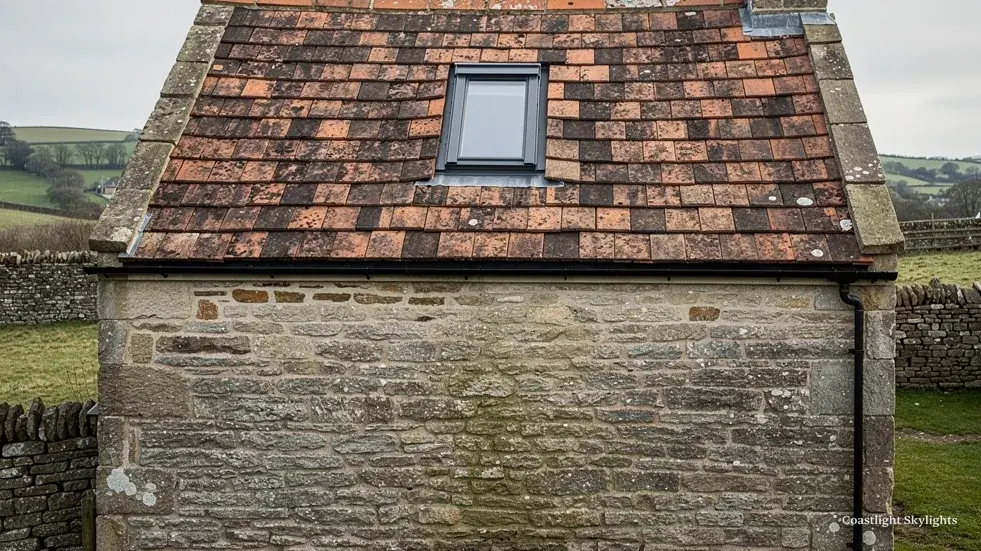
An older house often calls for restraint. A unit that sits low and flush with the covering is easier on the eye than one that stands proud, and where the house is in a protected setting, that restraint is usually what a planning officer asks for. The table below sets out how the main unit types compare for the kinds of roof we expect here.
| Unit | Best on | Note |
|---|---|---|
| Conservation rooflight | Pitched roofs, older houses | Slim frame, flush with the covering |
| Standard roof window | Plain pitched loft roofs | More frame visible |
| Flat roof rooflight | Single storey extensions | Low profile on a kerb |
| Roof lantern | Wide flat roofs | Raised, so more visible |
| Sun tunnel | Roofs where an opening is hard | Small dome, no large cut |
Our page on conservation rooflights goes through the slim, flush type in detail, and the entry on standard roof windows covers the common alternative. If the roof is a flat one, flat roof rooflights and roof lanterns are the places to look. Where an opening is hard to make, a sun tunnel is the gentlest way to bring daylight in.
The choice of glass also deserves a word at the survey. South-facing slopes collect strong sun, and a loft room can overheat, so blinds or solar control glazing are worth deciding before the order goes in, not afterwards. Energy efficient rooflights explains the options.
If the building is a VELUX-fitted loft, VELUX windows explains the size codes so a like-for-like order is simple.
Sheet 03
Reaching a roof off a village road
Scale: the lane
Access in a village can be easier or harder than in a town. There are fewer parked cars on some roads and more on others, and some lanes are narrow enough that a delivery lorry is a problem. The route to a roof depends on the house and the road, and we settle it at the survey, then write it into the access plan.
A scaffold or tower that takes up pavement or carriageway needs a licence from East Sussex County Council. We apply for it, and for any parking bay suspension the job needs. Each access plan records which way we go up, which licences are applied for, how neighbours are told and what the job costs. The access plan page explains the layout, and the scaffold licence guide covers the process, written around Brighton & Hove but similar in outline.
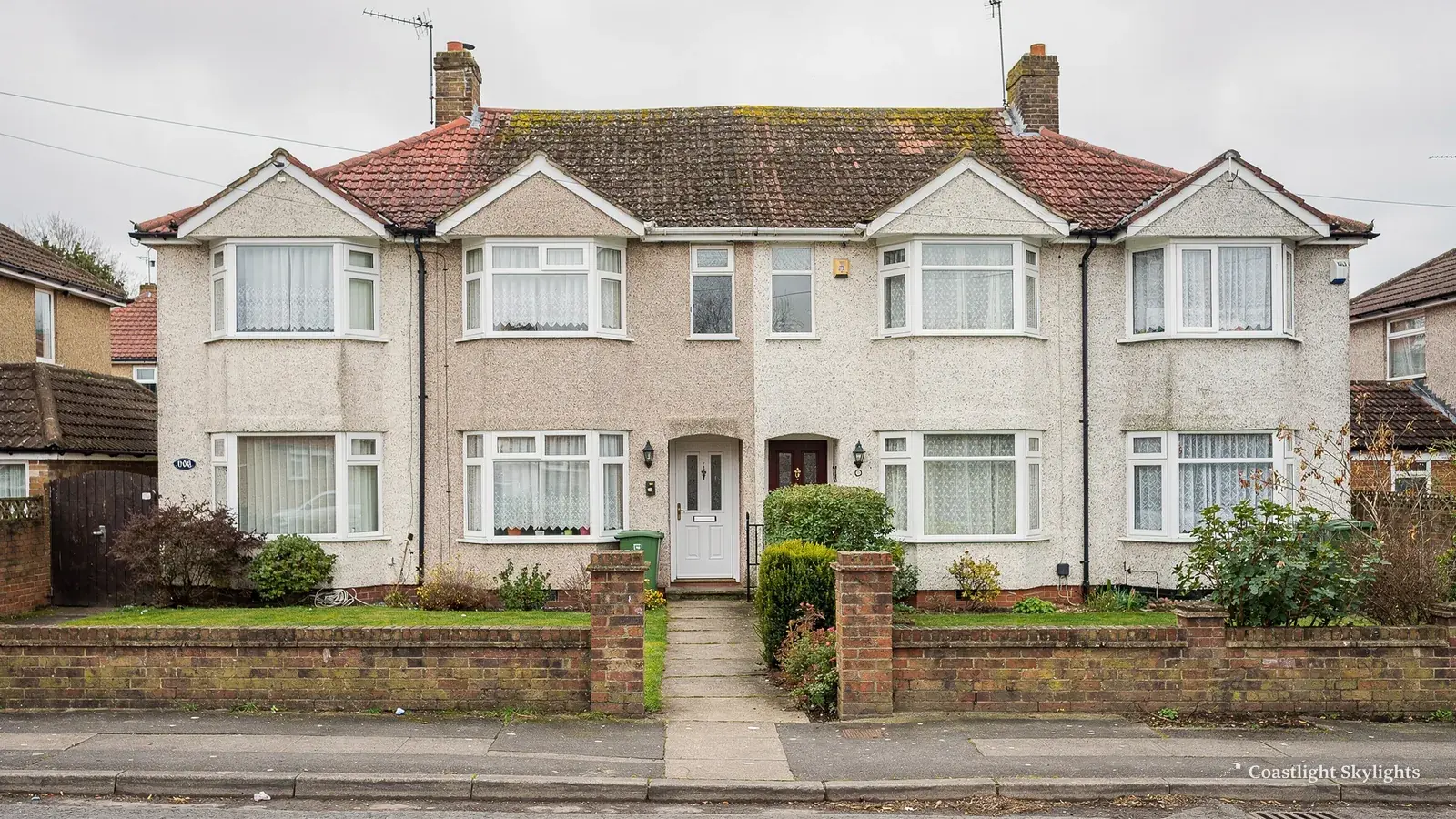
The National Trust owns the coast and much of the land between the villages and the A259, which keeps that land open. For a rooflight job this changes little, but it is a reminder that the work here is on houses already standing, reached by the roads that serve them. We think about the delivery as carefully as the fitting.
A few practical things apply in a village setting. Sloping plots may make a rear scaffold impractical. A garden reached through a narrow passage may need a hand carry rather than a lift. A house set back from the road may allow a mobile platform to stand on the drive. We list these at the survey and cost them in the quote, not on the day.
Sheet 04
Planning inside the national park
Scale: the park
East Dean's centre is inside the South Downs National Park. For a rooflight, planning therefore goes to the South Downs National Park Authority rather than Wealden District Council. Building Control stays with Wealden, working through the East Sussex Building Control Partnership. These are two different offices with two different jobs.
The national register records a conservation area named East Dean. The sources we checked disagree about Article 4 directions: Wealden's pages say there are none, while its register lists some site-specific ones. The park authority is the authority for any direction here. So the honest answer is to ask: contact the park authority with your address and the work you want.
Park authorities look closely at how a change affects the character of a building and its setting. A rooflight on a rear slope that nobody sees from a public place is a different request from one on a front slope facing the lane. Where a choice exists, we usually suggest the quieter slope first, and a slim, low-profile unit second. That is not a rule, only the order in which questions tend to be easiest to answer.
The detail of what needs permission is in the planning guide. Some of the parish's historic buildings may also be listed, in which case separate consent is a further step, and the survey is where we ask which applies. The Building Regulations guide sets out what Wealden's partnership looks at once the planning question is settled.
Sheet 05
Replacing what is up there
Scale: the old unit
Some roofs already carry a rooflight, perhaps a roof window fitted in an old loft or a rooflight put into an extension. When that unit has failed, with fogged glass, a stained frame or water marks on the ceiling below, we assess it and replace it. The notification to Building Control is made where the work is notifiable.
In an older roof, replacement has its own difficulties. The opening may not be square, the rafters may be a different size from a modern roof and the original flashing may have been made by hand. We measure the real opening and plan the new unit to fit it, not the other way round. Some roofs allow a like-for-like swap with minimal disturbance; others need timberwork. The survey says which.
The order of work is simple. We open up and look at the failed unit, the frame and the structure around it. We measure the real opening, not the label on the old glass. The new unit is chosen for the roof, the setting and the authority involved. Then the old one comes out, the new one goes in and the opening is weathered before we leave the roof. Inside, the finish is made good, and the notification goes in where the work requires it.
On an older house, there is one more step that is easy to miss: the neighbours. Sound carries in a quiet village, so we tell the houses either side what is happening and roughly when, as part of the access plan.
The signs of a unit that needs replacing are set out under misted and failed rooflights, and the 10-year workmanship guarantee that covers our work is described on the guarantee page.
Sheet 06
Questions from East Dean owners
Scale: the village
Friston and East Dean are named together because they share a parish, and the same questions travel across both. The advice on this page applies to owners of either, provided the address falls where we say it does, and we check that when you book.
Three questions are worth answering for owners in either village. Is my house too old for a new rooflight? Does the national park rule it out? Who do I speak to first?
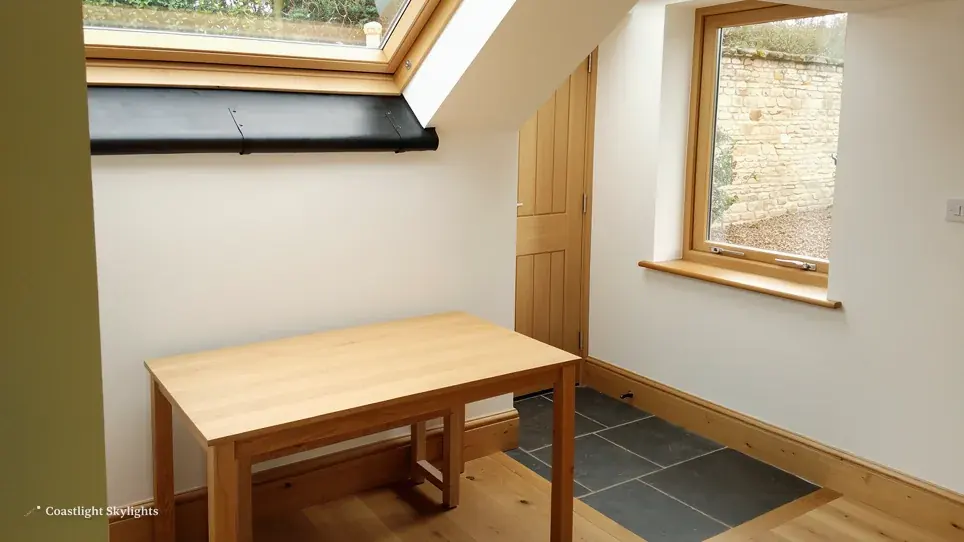
A new rooflight is not ruled out by age or by the park. What both mean is that the unit, its position and its detail matter more, and that you need a written answer from the planning authority before work starts. We design the quote so that planning is dealt with first, not left as a loose end.
A good first step is to contact us for a free survey. We look at the roof from inside and out, take measurements and tell you honestly what is possible. A fixed written quote follows, with the access plan as its first page. Costs depend on the size of the unit, the roof structure and the access route, and the costs page sets out what moves a price.
One more fair question is whether the work disturbs the household for long. A single rooflight is a short job; a lantern or several windows take longer. We tell you at the survey how long the job should take, what will be covered in the room below, and which areas need to be cleared. You do not need to be at home every minute, but someone should be available to let us in and sign off at the end.
Two ways to light a dark room
A pitched roof window
A glazed unit in the slope of the roof, giving light and a view of the sky.
- Needs an opening in the roof covering
- Visible from the street if the slope faces it
A sun tunnel
A small dome with a reflective tube down to a ceiling diffuser.
- Smaller cut in the roof
- Gives light but no view
East Dean rooflight queries
Who decides planning in East Dean?
The South Downs National Park Authority, because the town centre is inside the park. Wealden District Council still runs Building Control.
Can I fit a rooflight in a house that is a historic building?
Sometimes, but the position, the detail and the consents matter. Ask the park authority first, and start from the planning guide.
Do you apply for the scaffold licence?
Yes. East Sussex County Council issues it, and we apply and note the details in your access plan.
How do I book a survey?
Send the quote form or write via the contact page, and we will arrange a time. After a free survey you receive one fixed written price.
For the full service, return to skylights and rooflights in Brighton & Hove.