East Preston
Station Road conservation area and Arun's planning check
Sheet 01
Who decides, and what to ask
Scale: the council
You will find East Preston 19.9 road miles west of central Brighton & Hove, well within our 30 mile road radius. The Brighton & Hove hub page gives the whole picture of what we fit, and this page starts, as a job here does, with planning.
Arun District Council is both the planning authority and the Building Control service for the village. The national register records the East Preston Station Road conservation area, designated in 1994. Whether your house is inside it is a matter of the address, and the council can say in a short call. We do not have a confirmed answer on any roof-specific direction for the village, and we would sooner say so than guess.
The practical sequence is simple. First, find out which side of the conservation area line you are on. Second, ask whether anything limits changes to the roof at your address. Third, only then settle the unit and the position. The planning guide explains how the national rules and local controls fit together.
It helps to bring a few things to that call: the full address, a note of what you want to fit and where, and any earlier planning history on the house. A rooflight on the rear slope, out of sight from the road, is usually an easier conversation than one facing the street, and the council will tell you if that is the case at your address.
Flats and converted buildings are a separate case, since the roof is usually not yours to alter without the freeholder's agreement. If that is your situation, the guide to flats and leasehold buildings deals with it.
Building Control is a different track. Arun's own service or a registered building control approver can sign it off, and the Building Regulations guide sets out which jobs fall under it.
Sheet 02
Roofs in a coastal village
Scale: the village
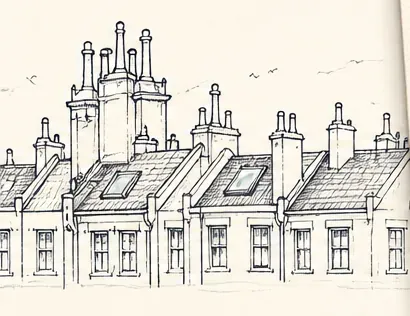
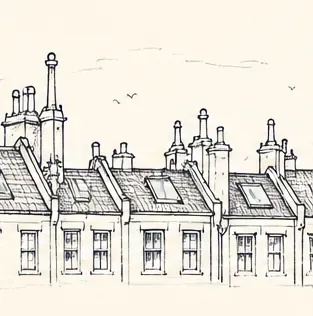
East Preston is a coastal village and a civil parish in the Arun district. It has older buildings with new uses: a village school that dates from 1840, for instance, is now an estate agent's office. A village like that has roofs of several ages standing side by side, and a rooflight job here begins by finding out which age you are dealing with.
The facts on file do not give us a catalogue of local house types, so we will not invent one. What we can say is how we approach the work. Whatever the age of the house, the survey starts with the roof from the inside and the outside: the covering, the pitch, the rafters and the existing openings.
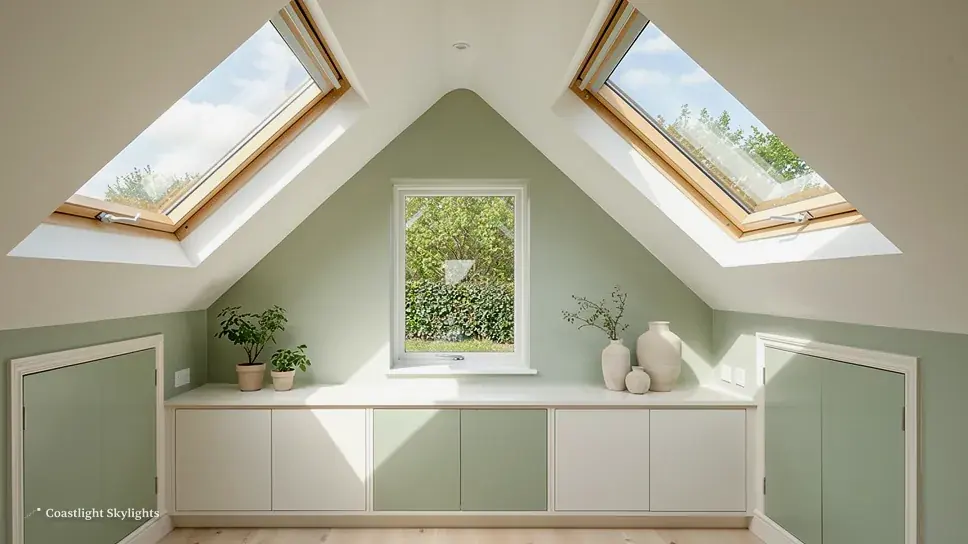
The coast brings its own concerns. Roofs near the sea are exposed to salt-laden air, and frames, fixings and seals have a harder life than they would inland. That is a good reason to specify marine-suitable finishes and to pay attention to the flashings and the sealed edges of each unit.
On an older building that has changed use, the roof structure may carry marks of past alterations, such as blocked openings, patched coverings and mismatched timber. We look at these before agreeing a position, because a rooflight that lines up with old framing is simpler to fit and tidier to look at.
Roof pitch and covering shape the choice of unit. On a tiled pitch, the flashing is built up course by course and lapped under the tiles above. On a slate roof the same job takes more care, because slates are brittle and need to be lifted and relaid with attention. On a flat roof the key point is the upstand, which must be high enough to keep water out and sound enough to take the new kerb.
Extensions add another layer. Where a home has had a rear or side addition, the junction between the old roof and the new is where leaks begin and where a rooflight needs careful placing. We keep a rooflight clear of that junction wherever possible, so the unit and the join do not compete.
Sheet 03
Reaching the roof, whichever way
Scale: the route
How we reach a roof depends on the plot, not the postcode. A house on a wide plot may take a tower in the garden, and a building on a busy road may need a platform from the street. If any of that equipment has to stand on a pavement or road, or a parking bay has to be suspended, West Sussex County Council issues the licence as highway authority. The application is ours to make; the scaffold licence and bay suspension guide shows what it involves.
The route is set down in the written access plan that comes with your quote, so you see it before the date is fixed. The table compares the three routes we use most.
| Route | Suits | Needs |
|---|---|---|
| Rear tower or scaffold | Houses with a garden or side access | Firm ground, boards |
| Street tower | Properties close to the pavement | Highway licence |
| Mobile platform | Short jobs on a road frontage | Parking bay suspension |
On a road frontage, a street tower needs careful timing. We set it out at the survey so that a licence is applied for in good time, and the job is not held up by paperwork.
Neighbours should hear about it first. A tower on a front drive or a scaffold along a boundary affects the people next door, and a short word before the job saves awkwardness. The notice to neighbours is part of the written plan, so it does not depend on memory.
Wind is another thing to plan for near the sea. A roof that is open to the weather needs the opening protected at all times, and the work only goes ahead when conditions allow. If a gust is forecast, the day is moved, not risked.
Sheet 04
Taking out an old East Preston rooflight
Scale: the old unit
Units on coastal roofs wear in a particular way. Salt and damp air work at seals and fixings, and the edge seal of a double-glazed unit is the weak point. When it lets go, moisture appears between the panes and will not clear. A unit in that state is replaced, not cleaned, and our write-up on failed and misted units goes through what that involves.
A frame that has corroded, a handle that no longer holds or a dome that has turned cloudy are the other signs. On aluminium and painted timber alike, the finish matters more near the sea, so we talk about it at the survey.
If the unit is in a bathroom or kitchen, the room below needs thought as well. Dust sheets go down, fittings are covered and the work is kept as tidy as a roof job can be. When the old unit comes out, there is a hole in the roof for a short time, so the covering and the temporary weathering are ready before the first tile is lifted.
Old rooflights can also be a different size from anything now made. Where the opening is odd, we either build the surround to suit a standard unit or order a made-to-measure one. The survey records the exact dimensions, because a few millimetres of error at the order stage becomes a problem on the roof.
A replacement is a chance to rebuild the surround. We check the upstand or kerb, the lining and the flashings, and anything that has been wet for a long time is replaced alongside the unit. The new rooflight then sits on sound timber.
Nothing is charged for the survey, and the written figure you receive afterwards does not move. The costs page sets out what moves a price.
Sheet 05
Choosing for pitched or flat
Scale: the roof
The two roof types call for different products, and a job in East Preston usually falls on one side or the other.
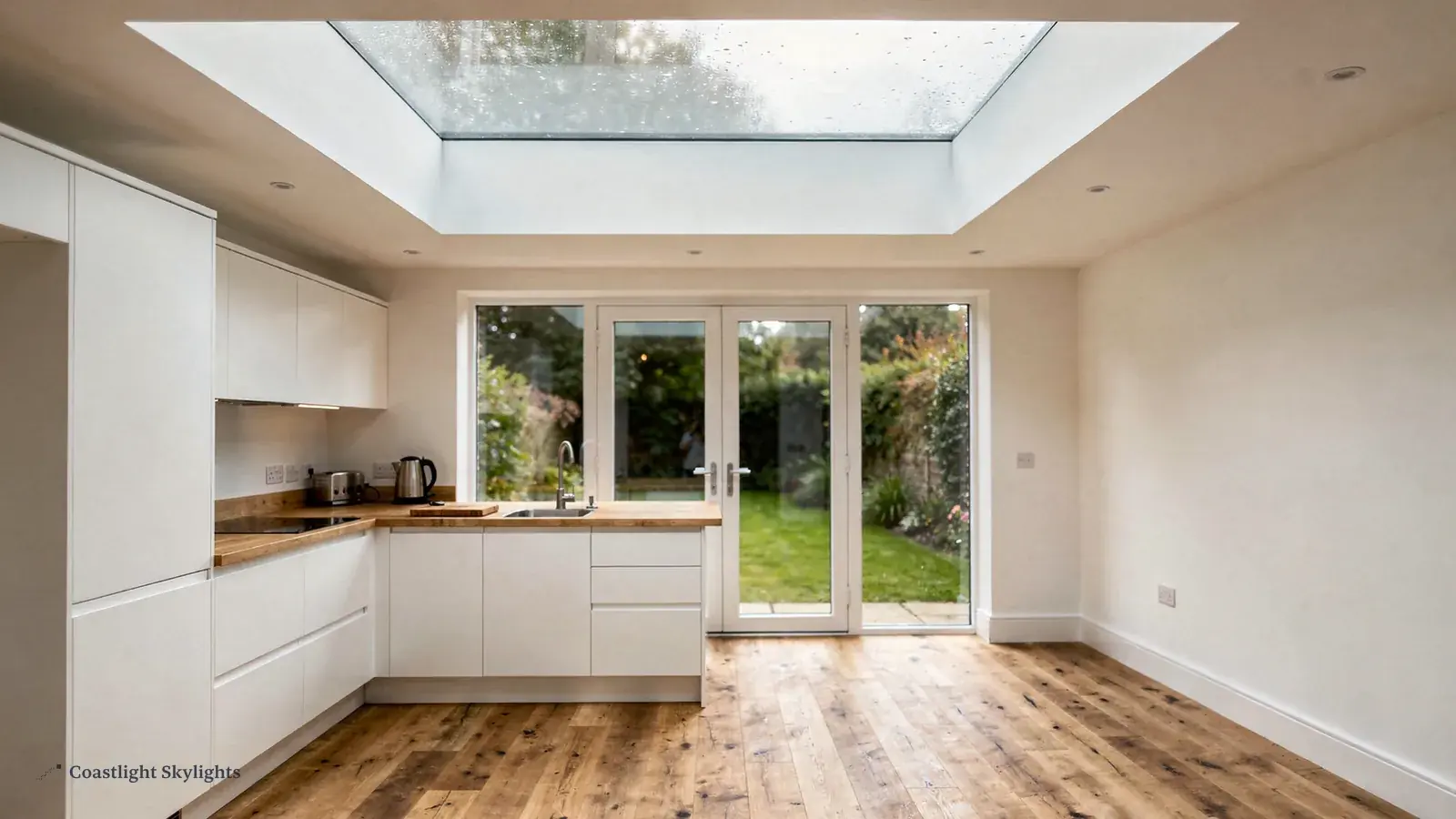
Pitched or flat
Pitched roof
A window set into the slope, usually between two rafters.
- A roof window for a loft room
- A sun tunnel for a hall or bathroom
Flat roof
A unit on an upstand or kerb above an extension.
- A flat rooflight for steady daylight
- A roof lantern for height and light on several sides
Near the coast, a choice of finish and glass can matter as much as the product. Solar glare off a bright day is real, and well-specified glazing helps with both heat and comfort. If you want a named make, we fit VELUX windows as well as other makes.
The room tells you a lot. A bedroom wants something that darkens at night and opens for air. A kitchen wants light over the worktop and a way to let steam out. A stairwell wants brightness without glare. Once you say what the room does, the choice usually narrows to one or two products, and the survey confirms which.
A unit that opens is useful in a kitchen or bathroom, and an electric opening rooflight makes sense where the window is out of reach. A building in the conservation area may suit a slim conservation rooflight that sits flush with the covering.
Sheet 06
What owners ask first
Scale: the doorstep
The sensible place to start is the council. Does the conservation area change what I can do? The honest answer is that it depends on the address and on anything attached to your planning history, and that the council can say quickly.
Next comes access. Can you get to a roof from a narrow side way, or does the scaffold take over the road? Both are worked out at the survey, and the plan is written down before work starts.
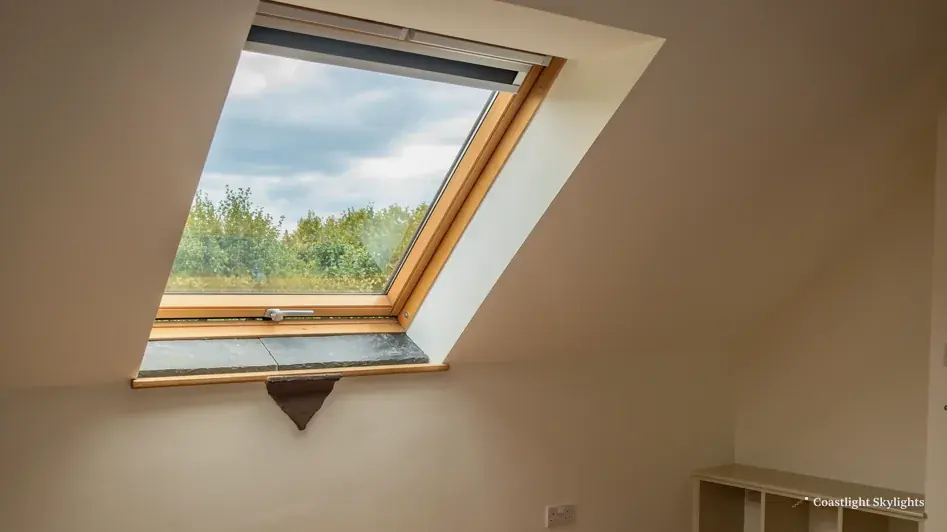
Then there is whether a failed unit can be sorted without changing the frame. The whole unit is replaced, because the seals are part of the unit, and a sound surround is kept and re-weathered.
Glare and heat are worth raising too. A south-facing rooflight in a coastal village gets strong light for much of the day, so solar control glass or a blind is worth discussing for bedrooms and kitchens. North-facing units give soft, even light and need little shading. We look at which way each slope faces when we visit, and we note it in the quote.
You may want to know how long the old unit has left. A sound frame with a clear pane can last a good while, while one with trapped moisture or a soft surround is near the end. We give an honest view at the survey and put it in writing, so you can plan the work when it suits you.
Noise is a fair question as well. Rain on glass can be louder than rain on tiles, and the choice of glazing makes a difference. If a loft bedroom is the room in question, say so at the survey, and we will talk through the options for the glass.
To book a visit, contact us or use the quote form. The Brighton & Hove page lists the full range of what we install.
East Preston roof questions
Is my East Preston house in the Station Road conservation area?
The council can tell you from your address. Ask before you settle on a design, and check whether anything limits roof alterations there.
Who handles Building Control here?
Arun District Council runs its own service, or you can use a registered building control approver.
Does sea air shorten the life of a rooflight?
It can be harder on seals, fixings and finishes than inland air. A good finish and well-dressed flashings make a difference, and we cover the choice at the survey.
Can a street scaffold be arranged on a busy road?
Yes, with a highway licence from the county council. We apply for it and put the timing in the access plan.