The short answer: a misted rooflight is not usually an emergency, but it is a unit that has stopped doing its job and will not recover. The sealed unit has failed, so the fogging stays or worsens. Plan the replacement rather than ignoring it, and treat any water coming in as a reason to act sooner.
Condensation trapped between the panes is a common reason to look hard at a rooflight, or skylight as homeowners call it. If you have found a misted rooflight and want to know how urgent it is, this page sorts the cases. It supports our wider misted and failed rooflights guidance.
What misting tells you
A sealed double or triple glazed unit has a gap between its panes, closed at the edge by a seal. When the seal fails, moist air gets into the gap and condenses on the cooler glass. That is the cloudy or streaky look you see. The full explanation is in why rooflights mist between the panes.
The key point is that the seal does not close itself again. Misting between the panes is a sign of a failed sealed unit, and the cure is replacement. Wiping the glass achieves nothing, because the moisture is inside, where you cannot reach. We cover that fully in can a misted rooflight be cleared.
When it is not an emergency
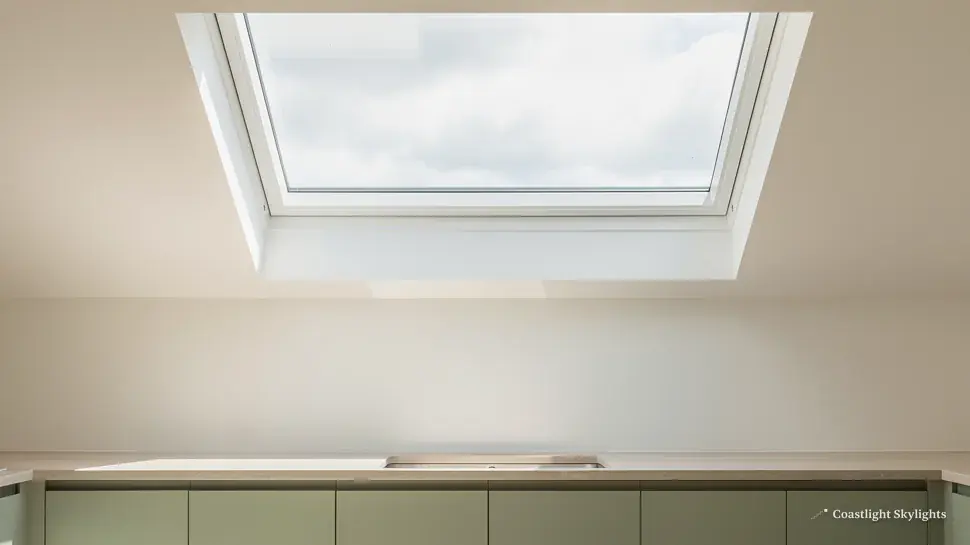
If the only symptom is cloudy glass, nothing is dripping and the frame looks sound, you have time to plan. The room is not at risk from the misting alone. The unit is simply performing worse than it should: the view is spoiled, light is reduced a little, and the insulation value of the glazing has dropped because the sealed gap has been compromised.
That gives you room to book a survey, compare options and choose a date that suits you, including allowing for scaffold licences and any freeholder consent. Planning a replacement is better than rushing one.
When it becomes urgent
Treat these signs as a reason to act sooner:
- Water on the inside of the frame or dripping from the rooflight in rain.
- Staining on the ceiling or the lining around the opening.
- A cracked pane, or glass that has shifted in its frame.
- A rotten or soft timber kerb or reveal around the unit.
- A frame that no longer closes, where the unit opens.
These point to more than a failed seal. Water entering the roof can damage insulation and timbers out of sight, and that costs more to put right the longer it goes on. If you see any of them, tell us when you contact us so the survey is booked with that in mind.
What waiting costs you
Left alone, a misted unit tends to look worse over time as the fogging spreads and deposits build up between the panes. The room loses some of the light the rooflight was put there to give. In a bedroom or a loft, the glass can also lose some of its insulating effect, which you notice as a cooler patch in winter or a warmer one in summer.
There is also a practical side. A roof job is easier to schedule when it is not an emergency. You can pick a dry spell, give notice to neighbours if scaffold is needed, and arrange the freeholder's consent if you live in a flat. If your building is leasehold, see rooflights in flats and leasehold buildings before you fix a date.
Different units, different warning signs
A roof window in a loft bedroom shows its trouble on the inside, where you see it every morning. A flat roof rooflight over a hallway or a bathroom may fog without anyone looking up for weeks. A roof lantern has more glass and more joints, so a failed pane can sit alongside a weeping bar or a lifted cap. Looking at the whole unit, not only the cloudy pane, tells you how much attention it needs.
Temporary measures while you wait
You do not need to do anything dramatic. If the rooflight is dry and only cloudy, leave it alone. Do not drill into the frame to drain it, and do not seal the edges with a tube of mastic from the shop. Both tend to leave the unit in worse shape than they found it and can complicate the survey.
If water is coming in, put a bowl or towel under it, move anything valuable out of the way and keep the room ventilated. Photograph the stain, the frame and the glass so we can see how it looks in daylight. We will look at it with that history in hand.
The type of rooflight changes how it behaves as well. An old plastic dome, for example, tends to go yellow and brittle in ways a glass unit does not, and our page on replacing an old plastic dome rooflight deals with that separately.
What happens next
Once you decide to go ahead, the order is simple.
- Survey. It is free. We inspect the unit, kerb and surrounding roof, and plan the route up.
- Quote. A fixed written figure arrives with the access plan.
- Licences and notification. We apply for any scaffold licence and handle Building Control where the work is notifiable.
- Replacement. The old unit comes out and the new one goes in, weathered into the roof.
The full sequence is in what replacing a failed rooflight involves. For the price side, read how much it costs to replace a misted rooflight.
Book a look at it
If your rooflight is only cloudy, there is no need to panic, but there is little reason to wait for the next wet spell either. If it is leaking, say so when you get in touch. Send a photo by WhatsApp on 07880 284133 or use the quote form. Replacements carry a 10-year workmanship guarantee. For the wider picture, go back to misted and failed rooflights.